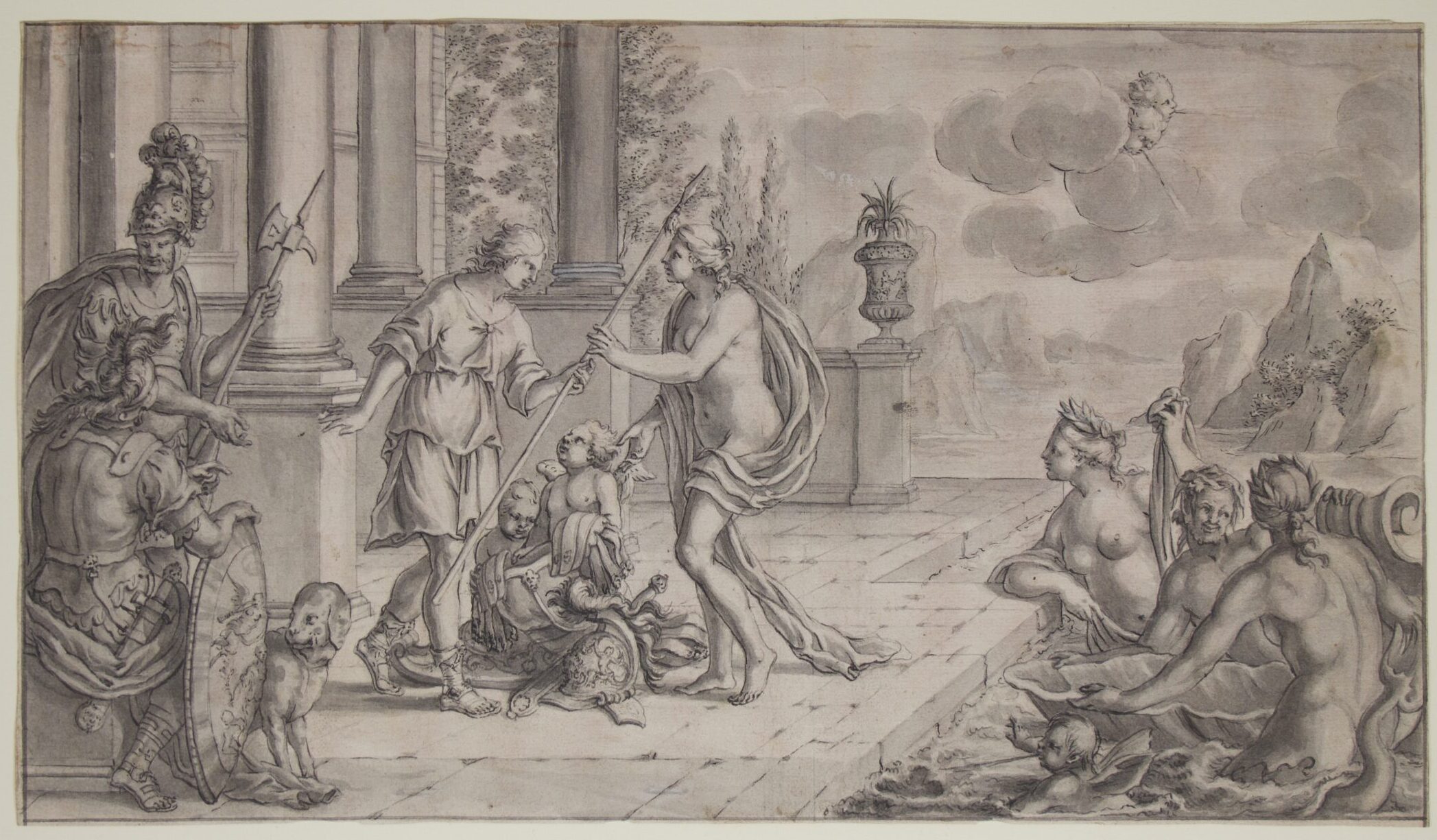
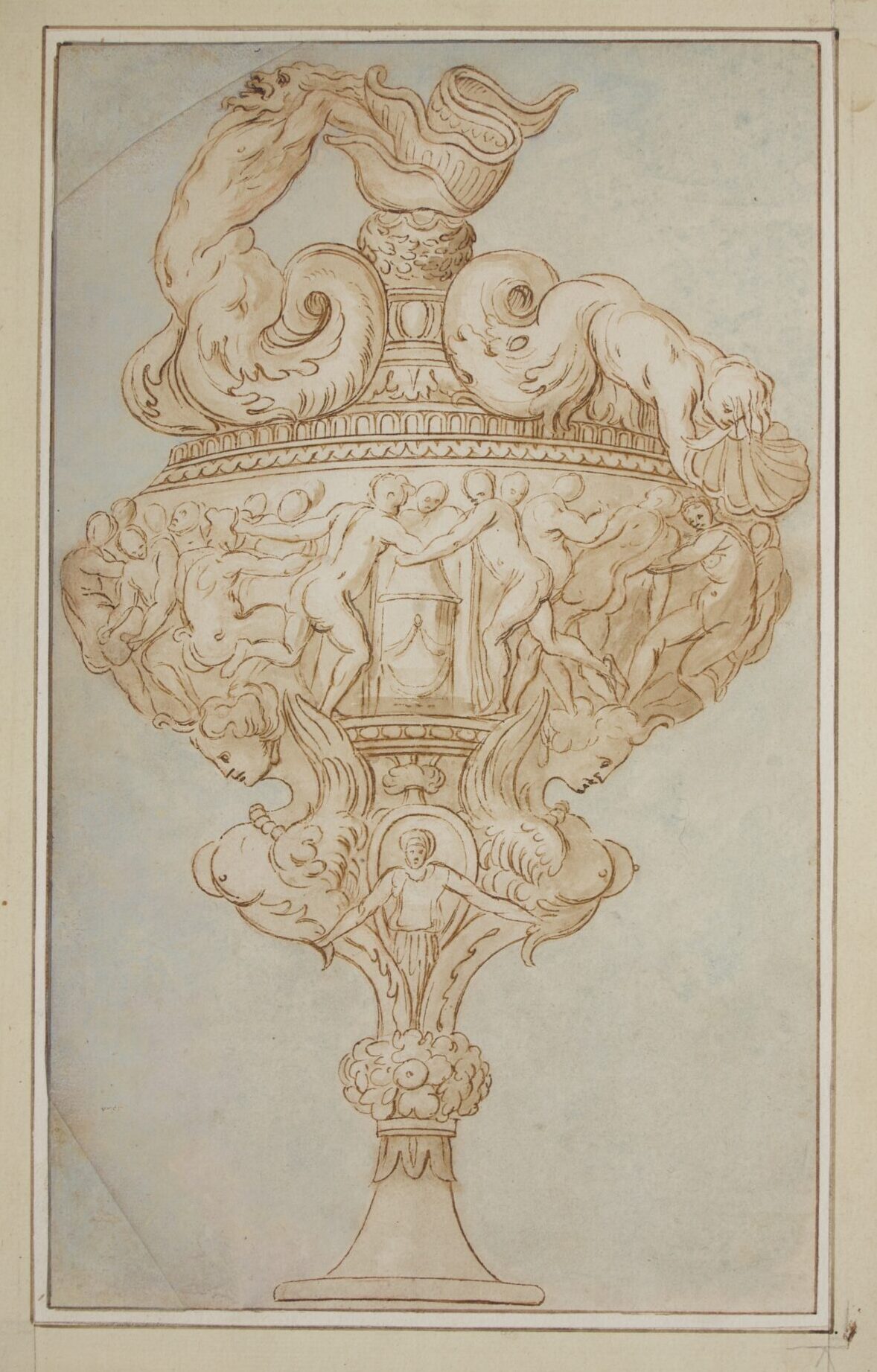
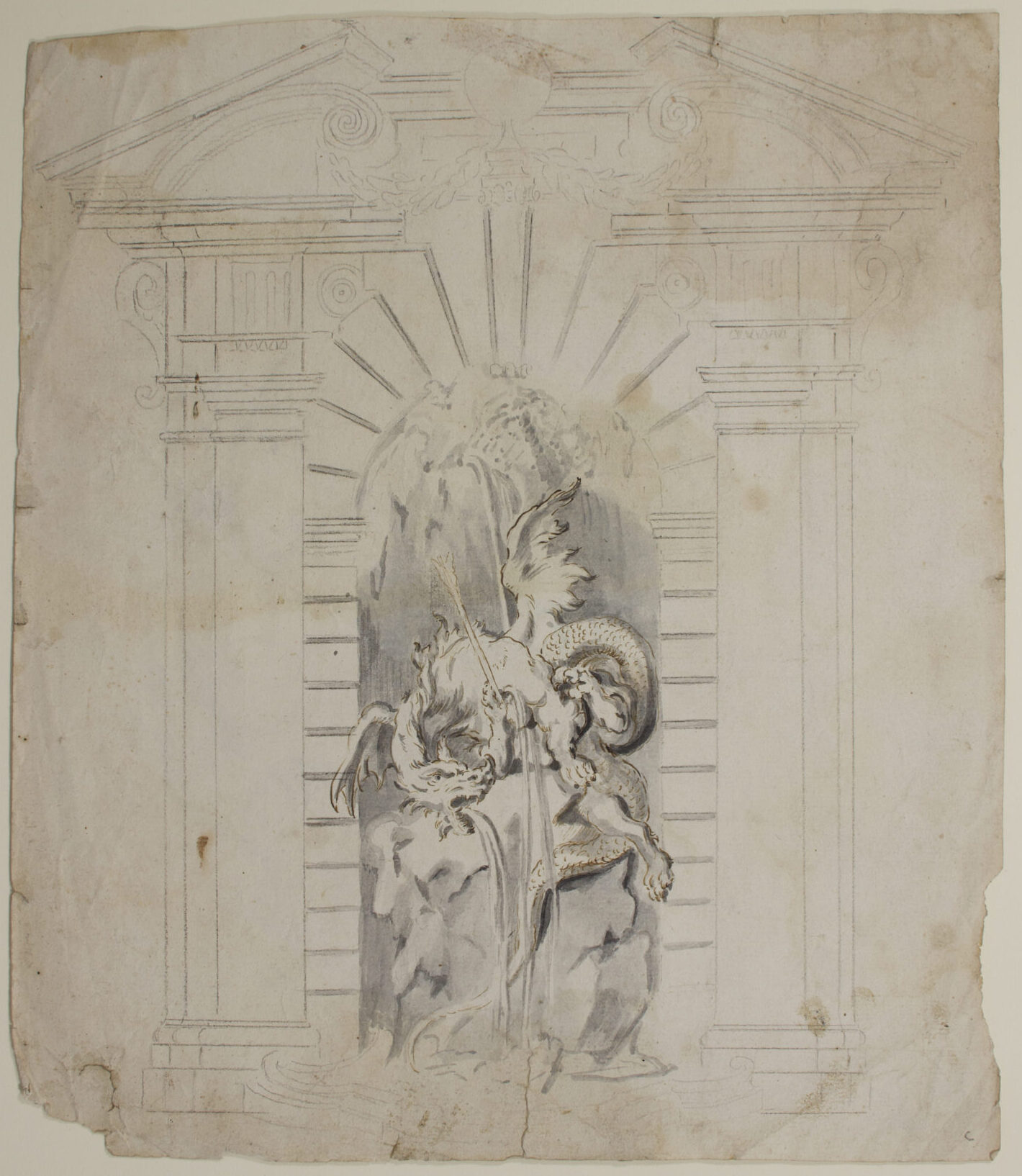
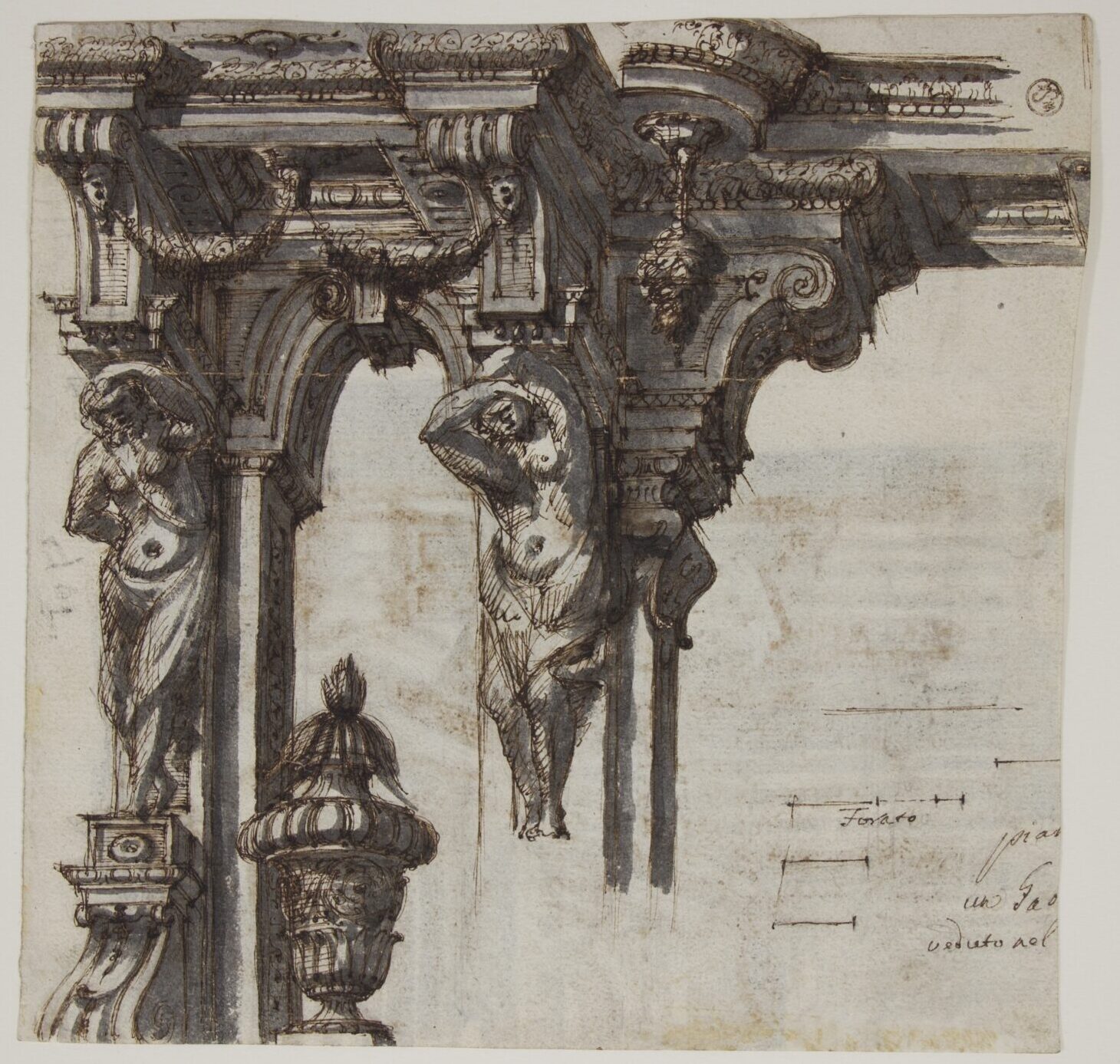
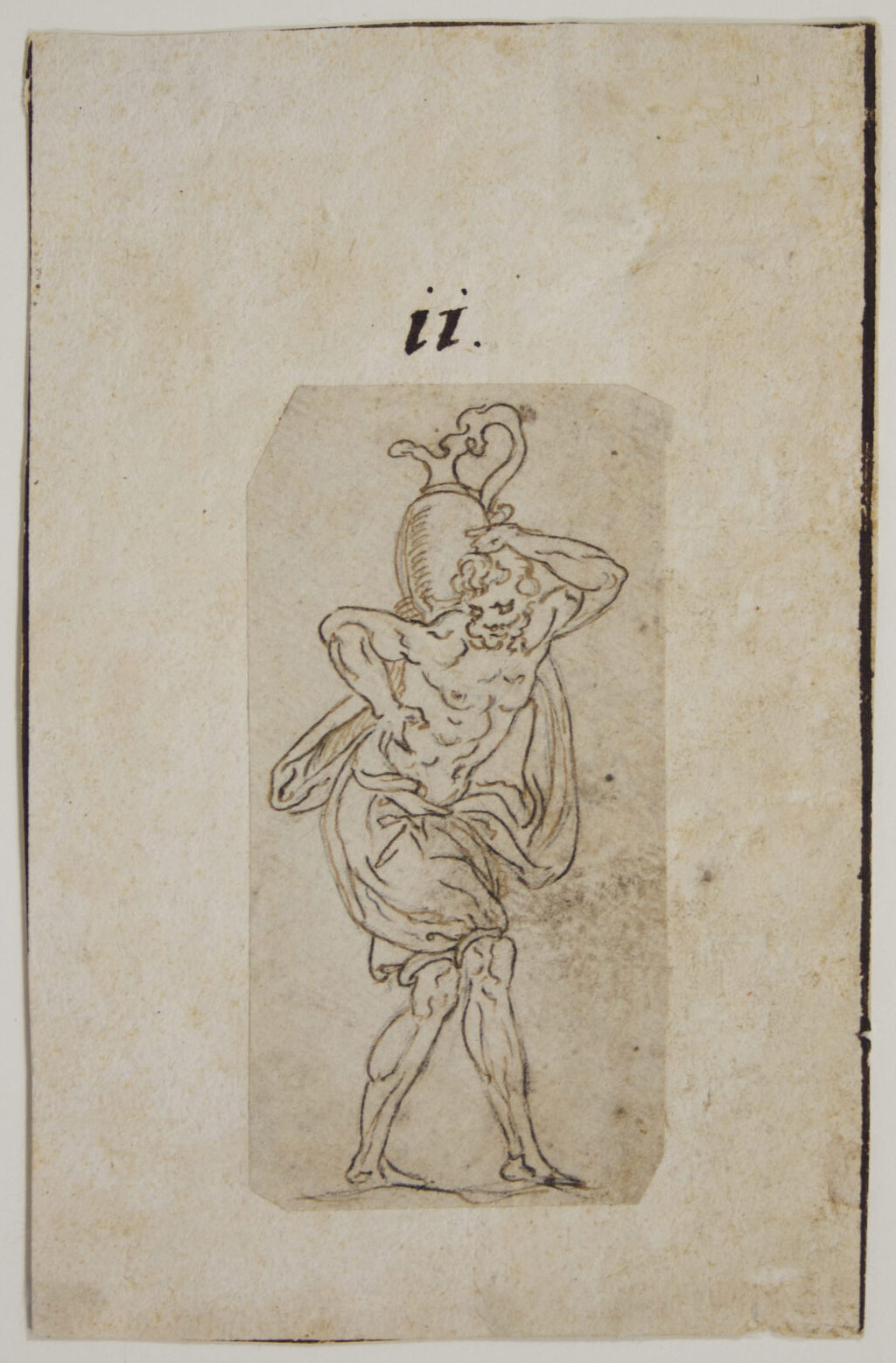
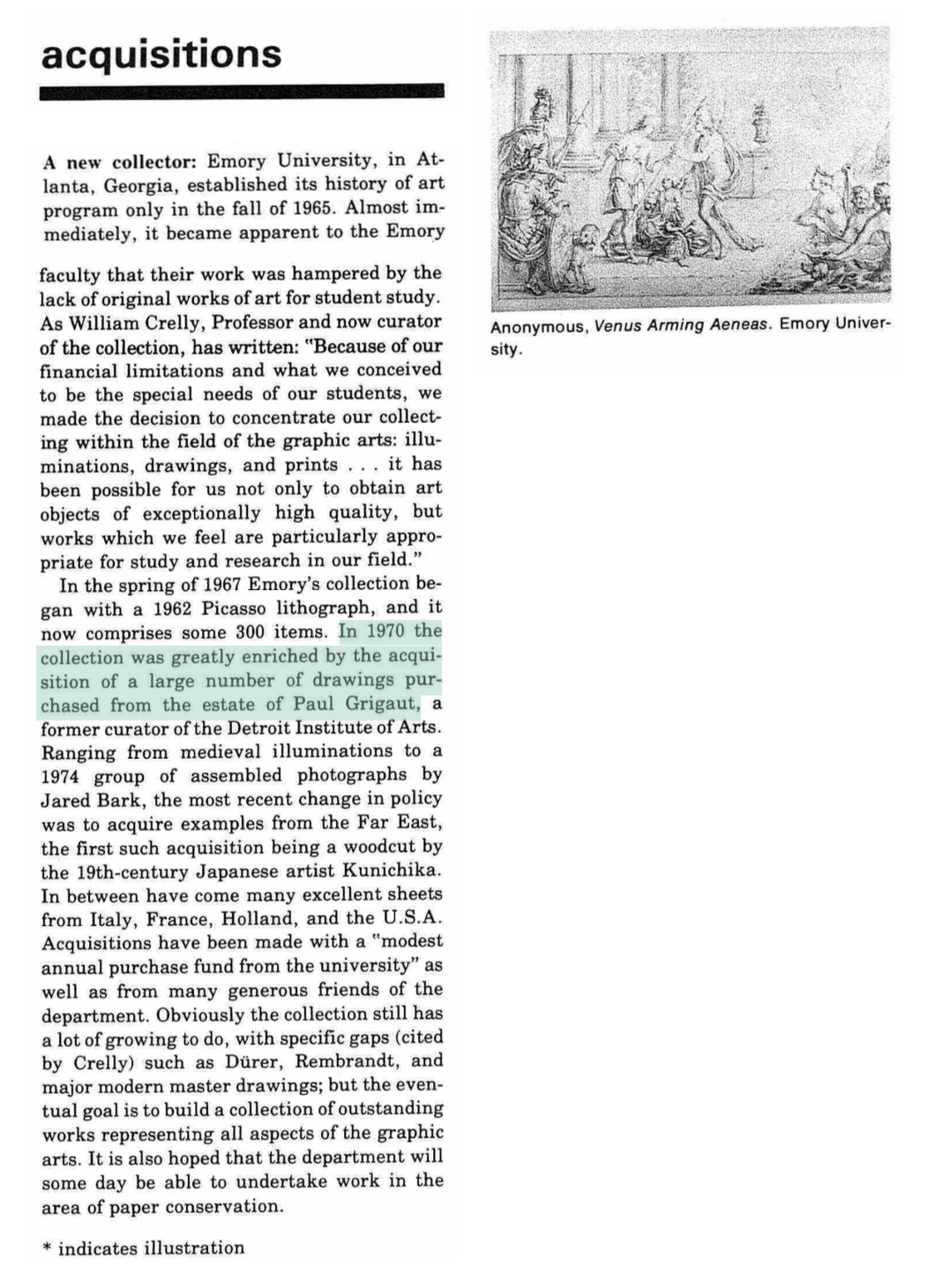
Perhaps it is their status as apparently preparatory drawings that these works did not receive much attention. In 1970, when they first arrived at Emory, they indeed functioned as works of decoration; some hung on the walls of the old art history building. Only in 1981 were they transferred to the Carlos Museum of Art, where they have laid dormant, roused from the time to time for permanent-collection exhibitions in the late ‘80s and ‘90s, and have been largely forgotten since.
Even in larger museums with more exhibition space, such works on paper are rarely displayed. Though this absence is partly due to preservation needs owing to the more fragile nature of paper, these drawings are often understood as the beginnings of an idea. Hence, they are seen as peripheral items, a means to an end, the humble and ephemeral chrysalis encasing an idea as it transforms into an object of the material world. Upon this metamorphosis, the life of the drawing seems to end, and the life of the object begins; the drawing has served its purpose.
Yet, as many scholars of the decorative arts have noted, just by looking at these drawings, it is often impossible to determine where in the lifetime of an object such a work resided. Is the work a project drawing – one to be smithed, built, or engraved. Or is the drawing a copy after a pre-existing object?